30 May 2026
Regulatory Changes Prompt Major Adjustments in Sweepstakes Casino Operations

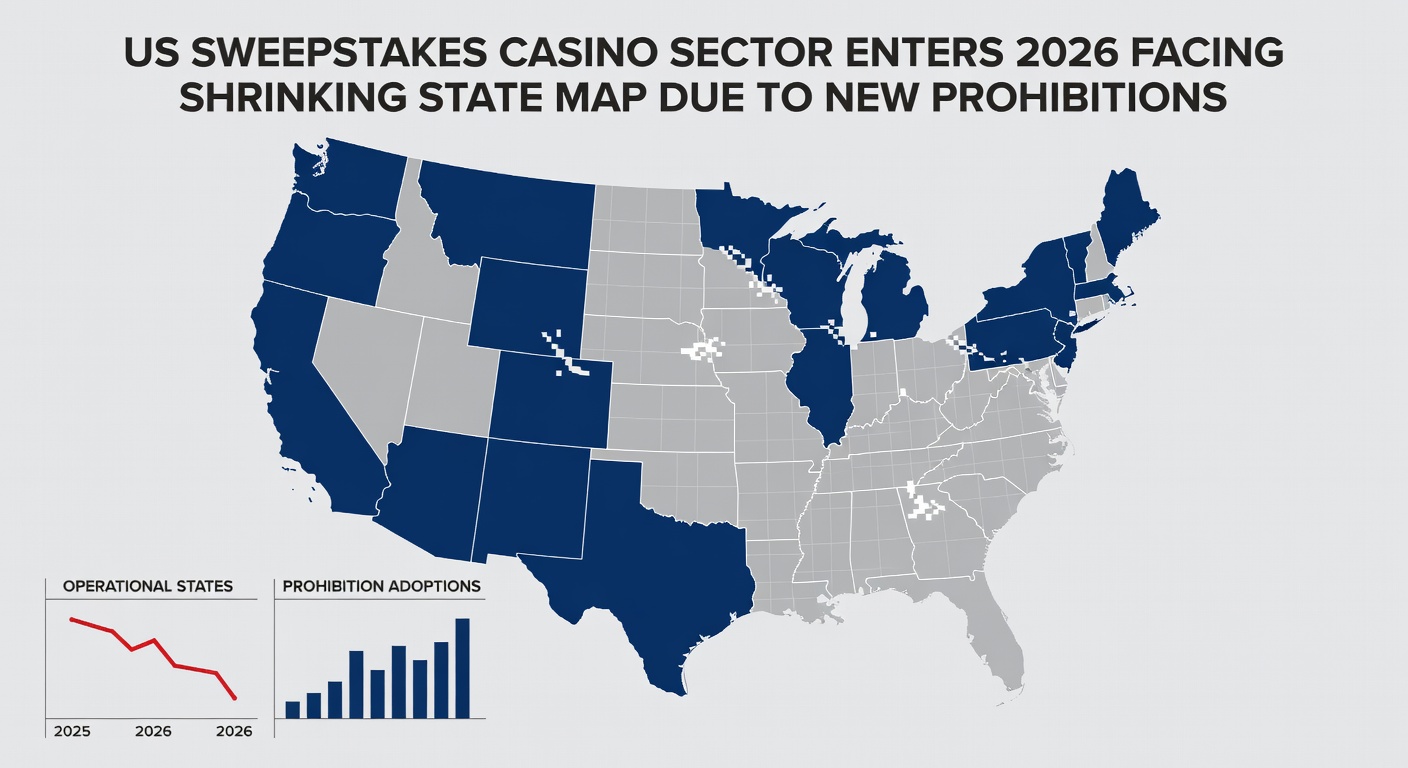
The US sweepstakes casino sector entered 2026 with several states implementing new restrictions that reduced available markets for operators relying on dual-coin models, and California’s Assembly Bill 831 took effect on January 1 while Indiana’s House Bill 1052 followed on July 1 according to legislative records.
These measures eliminated an estimated one-fifth of national revenue for the sector with companies such as Virtual Gaming Worlds responding through state exits and brand launches that avoid previous mechanics. Data from industry tracking shows the combined impact altered operational footprints for multiple platforms that previously operated across dozens of jurisdictions.
California Legislation Takes Effect
Assembly Bill 831 established prohibitions that removed sweepstakes casino access in one of the largest markets and operators began compliance preparations months ahead of the January 1 2026 deadline. The bill addressed specific elements of the dual-coin system where players purchase gold coins alongside sweepstakes entries and enforcement started immediately upon the new year. Legislative summaries indicate the change targeted platforms offering casino-style games through promotional entries rather than traditional wagering frameworks.
Market analyses placed California’s contribution at roughly twenty percent of total sector revenue before the prohibition and several major operators announced withdrawal plans by late 2025 to avoid penalties. Payment processing adjustments followed quickly as companies sought alternative rails that complied with updated state rules while maintaining service continuity elsewhere.
Indiana Implements Additional Restrictions
House Bill 1052 extended similar limitations effective July 1 2026 and further reduced the number of states where dual-coin sweepstakes casinos could operate without modification. Indiana lawmakers cited consumer protection concerns in bill language while operators monitored enforcement patterns in other restricted jurisdictions for guidance. The staggered timeline between California and Indiana allowed some companies to test adaptation strategies before the second prohibition activated.
Combined figures from the two states created measurable contraction in the national map and analysts tracking player migration noted shifts toward remaining available markets. Those who studied compliance patterns observed that operators prioritized states without equivalent legislation during the transition period.
Operator Responses and Brand Development
Virtual Gaming Worlds which operates Chumba Casino and related platforms began exiting restricted states while introducing new brands designed without dual-coin elements such as Just Slots. These launches focused on single-currency mechanics and adjusted marketing approaches that emphasized different promotional structures to align with regulatory requirements. Payment rail modifications accompanied the changes as companies navigated evolving financial service restrictions tied to the prohibitions.
Additional operators followed similar paths with some shifting resources toward skill-based or alternative game formats that avoided the prohibited mechanics. Marketing campaigns in active states incorporated clearer disclosures about available features and compliance teams expanded to monitor ongoing litigation risks associated with legacy operations. Industry reports from mid-2026 documented these transitions as companies balanced revenue preservation with legal obligations.
Timeline Developments Through Mid-2026
By May 2026 operators had completed initial exits from California and prepared final adjustments ahead of Indiana’s July enforcement date. Companies reported reallocating marketing budgets toward states that retained favorable frameworks while testing new brand concepts in limited releases. Figures released by sector monitoring groups showed continued contraction in overall addressable markets compared with 2025 baselines.
Litigation surrounding the prohibitions progressed through state courts with several challenges testing the scope of the new laws. Operators maintained active compliance programs that included regular reviews of payment partners and promotional language to reduce exposure. Those tracking the sector noted that adaptation strategies evolved rapidly as enforcement data accumulated from the first affected states.
Conclusion
The combined effect of Assembly Bill 831 and House Bill 1052 reshaped operational strategies for sweepstakes casino companies entering 2026 with measurable reductions in available markets. Virtual Gaming Worlds and similar operators responded through brand diversification payment adjustments and selective state withdrawals that addressed the new prohibitions directly. Continued monitoring of remaining jurisdictions and legal developments provides the framework for further adjustments throughout the year.